🔑 Finance8 min read· July 22, 2026
Leasing vs Buying a Car: Which Is Cheaper?


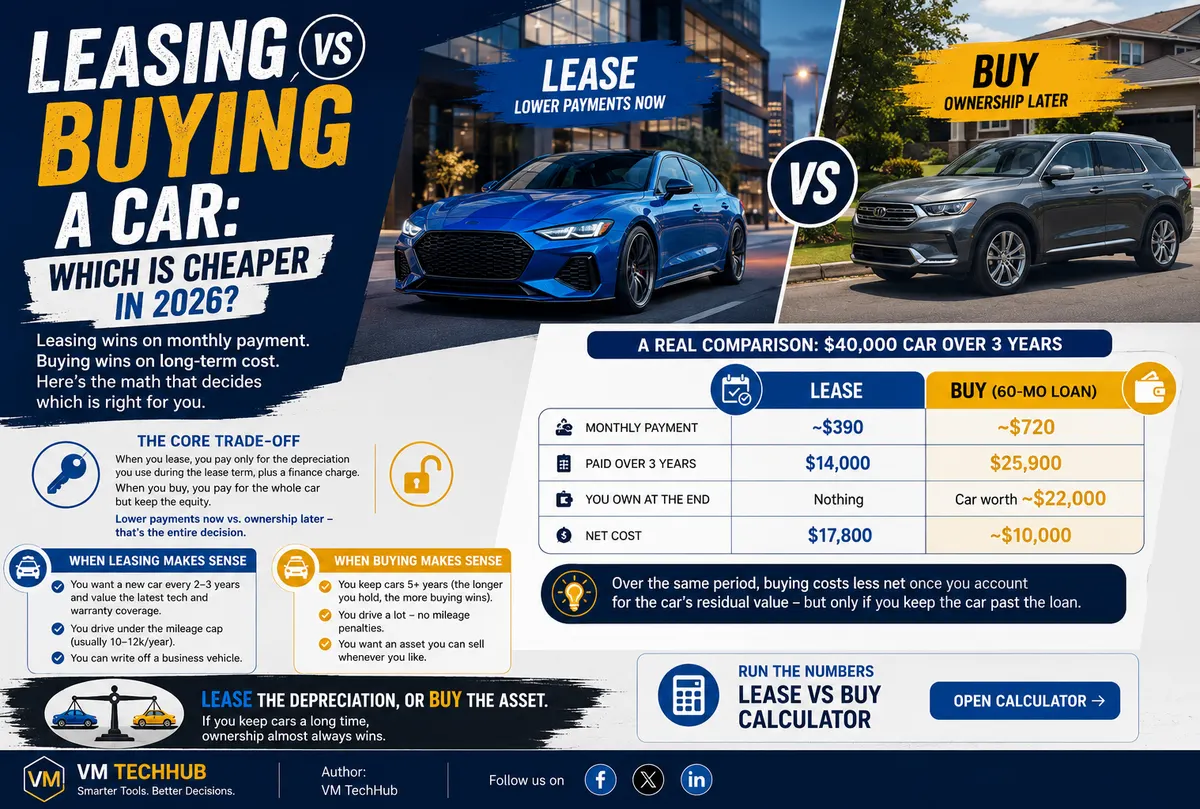
Leasing wins on monthly payment. Buying wins on long-term cost. Here's the math that decides which is right for you.
The core trade-off
When you lease, you pay only for the depreciation you use during the lease term, plus a finance charge. When you buy, you pay for the whole car but keep the equity. Lower payments now versus ownership later - that's the entire decision.
A real comparison: $40,000 car over 3 years
| Lease | Buy (60-mo loan) | |
|---|---|---|
| Monthly payment | ~$390 | ~$720 |
| Paid over 3 years | $14,000 | $25,900 |
| You own at the end | Nothing | Car worth ~$22,000 |
| Net cost | $17,800 | ~$10,000 |
Over the same period, buying costs less net once you account for the car's residual value - but only if you keep the car past the loan.
When leasing makes sense
- You want a new car every 2–3 years and value the latest tech and warranty coverage.
- You drive under the mileage cap (usually 10–12k/year).
- You can write off a business vehicle.
When buying makes sense
- You keep cars 5+ years (the longer you hold, the more buying wins).
- You drive a lot - no mileage penalties.
- You want an asset you can sell whenever you like.
Lease the depreciation, or buy the asset. If you keep cars a long time, ownership almost always wins.
Run the numbers
Lease vs Buy Calculator