⚡ Fuel & EV6 min read· July 21, 2026
How Much Do You Really Save Going Electric?


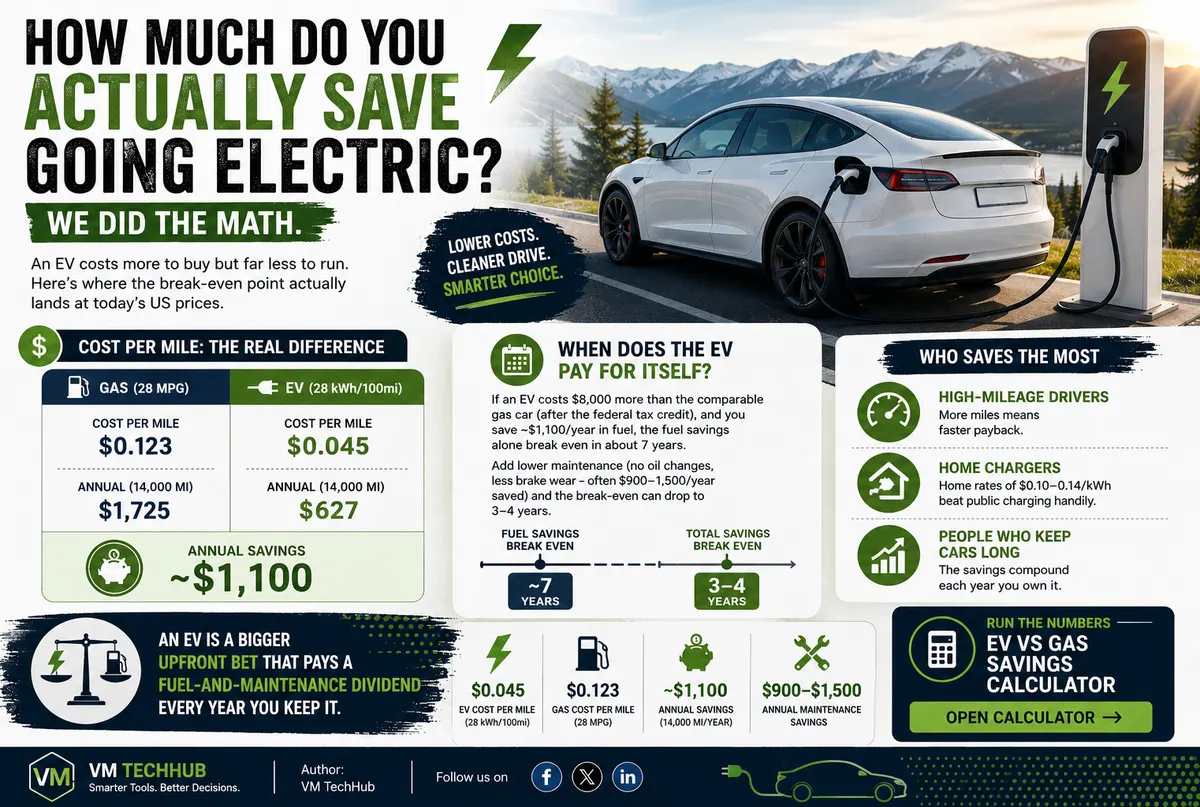
An EV costs more to buy but far less to run. Here's where the break-even point actually lands at today's US prices.
Cost per mile: the real difference
At the US average of $0.16/kWh electricity and $3.45/gallon gas:
| Gas (28 MPG) | EV (28 kWh/100mi) | |
|---|---|---|
| Cost per mile | $0.123 | $0.045 |
| Annual (14,000 mi) | $1,725 | $627 |
| Annual savings | ~$1,100 | |
When does the EV pay for itself?
If an EV costs $8,000 more than the comparable gas car (after the federal tax credit), and you save ~$1,100/year in fuel, the fuel savings alone break even in about 7 years. Add lower maintenance (no oil changes, less brake wear - often $900–1,500/year saved) and the break-even can drop to 3–4 years.
Who saves the most
- High-mileage drivers - more miles means faster payback.
- Home chargers - home rates of $0.10–0.14/kWh beat public charging handily.
- People who keep cars long - the savings compound each year you own it.
An EV is a bigger upfront bet that pays a fuel-and-maintenance dividend every year you keep it.
Run the numbers
EV vs Gas Savings Calculator