7 Ways to Lower Your Car Loan Rate in India


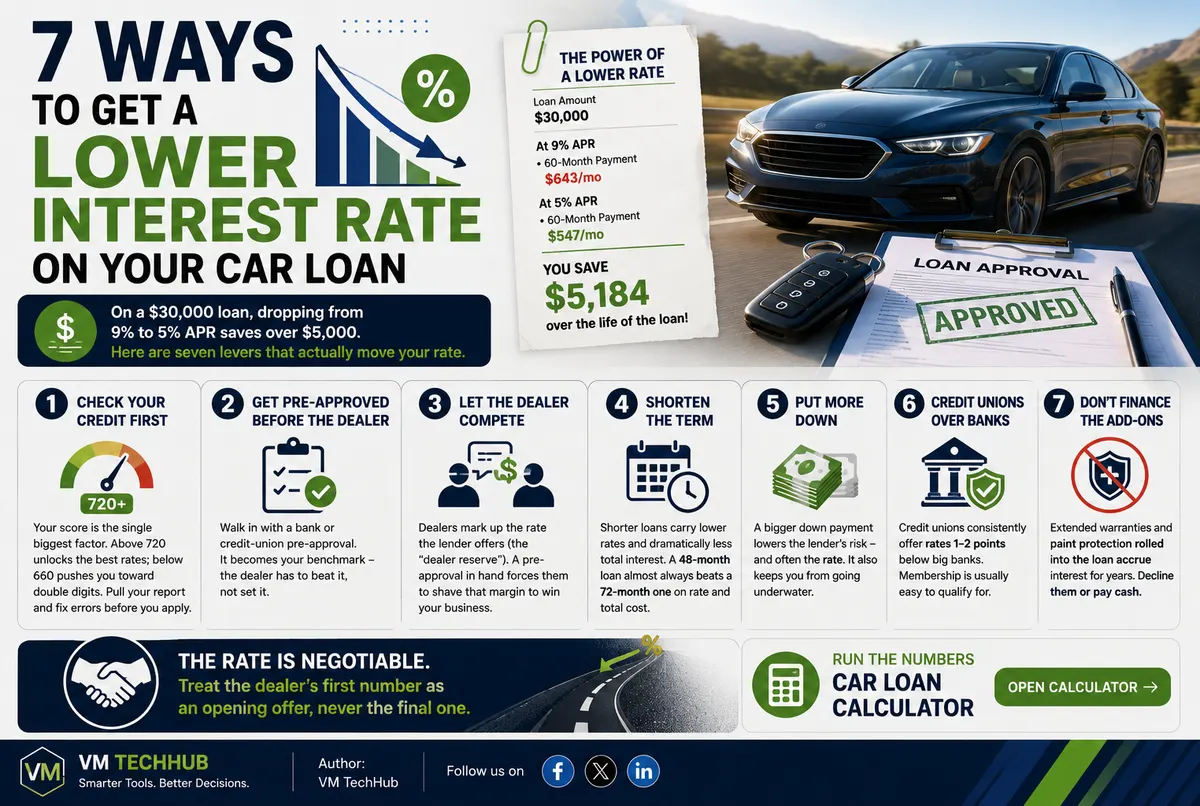
On an ₹8 lakh, 5-year loan, dropping from roughly 12% to 8% p.a. saves well over ₹1 lakh in total interest. Here are seven levers that actually move your rate.
1. Check your CIBIL score first
Your credit score is the single biggest factor lenders weigh. A score above 750 typically unlocks the best rates on offer; below 700 pushes you toward the higher end of a lender's range. Pull your report and fix any errors before you apply.
2. Get pre-approved before you visit the dealer
Walk in with a pre-approval from your bank or an NBFC. It becomes your benchmark - the dealer's in-house finance desk has to beat it, not set it for you.
3. Let lenders compete
Dealers often earn a commission on the loan they arrange, which can be built into the rate they offer you. A pre-approval in hand - or even just quotes from two or three banks - gives you real leverage to negotiate that margin down.
4. Shorten the tenure
Shorter loans usually carry a lower rate and dramatically less total interest paid. A 3-4 year loan almost always beats a 7-year one on both the rate and the total cost, even though the EMI is higher.
5. Put more down
A bigger down payment lowers the lender's risk on the loan - and often the rate you're offered. It also keeps you from being upside-down if you need to sell early.
6. Compare public sector banks, private banks, and NBFCs
Rates and processing fees can differ meaningfully across public sector banks, private banks, and NBFCs for the same profile. It's worth getting at least one quote from each category rather than only checking the lender the dealer suggests.
7. Don't finance the add-ons
Extended warranties, fabric protection, and accessory packages rolled into the loan amount accrue interest for the full tenure. Pay for them separately in cash, or decline them.
The rate on offer is rarely final. Treat the dealer's first number as an opening position, not the floor.
Run the numbers
Car Loan EMI Calculator