How Much You Save Going Electric in India


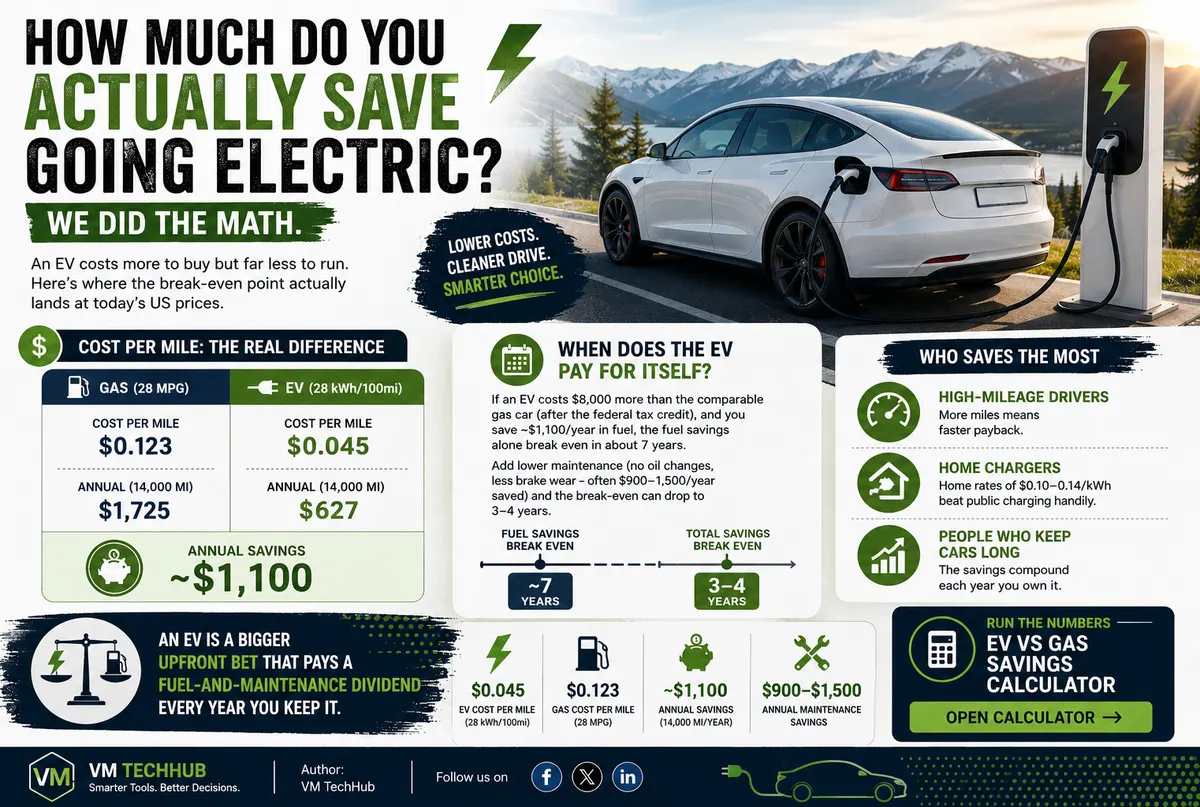
An EV costs more to buy but far less to run per kilometre in India. Here's roughly where the break-even point lands - and why it shifts a lot by state and by whether you can charge at home.
Cost per km: the real difference
Using a representative home electricity rate of ~₹8/kWh and petrol at ~₹100/litre (both vary meaningfully by state and city, so check your own rates):
| Petrol (18 km/l) | EV (~7 km/kWh) | |
|---|---|---|
| Cost per km | ₹5.56 | ₹1.14 |
| Annual (12,000 km) | ₹66,700 | ₹13,700 |
| Annual savings | ~₹53,000 | |
Illustrative only. Electricity tariffs range roughly ₹4-10/kWh depending on state and slab; petrol and diesel prices vary by state taxes and change often.
When does the EV pay for itself?
If a comparable EV costs, say, ₹4-6 lakh more than the petrol equivalent (before any state EV subsidy or lower road tax/registration that many states offer on EVs), and you save roughly ₹50,000-55,000 a year in fuel, the fuel savings alone break even in about 8-10 years at that gap. Lower running maintenance - no oil changes, less brake wear, fewer moving parts - typically saves an additional ₹8,000-15,000/year and can pull the break-even in noticeably earlier, especially once you also factor in any state purchase incentive.
Who saves the most
- High-mileage, city-heavy drivers - more km means faster payback, and stop-start city driving favors EV efficiency.
- Home or society charging access - home/society AC charging is far cheaper per unit than public DC fast-charging.
- Buyers in states with strong EV incentives - lower or waived road tax and registration fees narrow the upfront price gap considerably.
- People who keep the car long - the annual fuel and maintenance savings compound every year you hold it.
An EV in India is a bigger upfront bet, but it pays a real fuel-and-maintenance dividend every year you keep it - the size of that dividend depends heavily on your state's tariffs and incentives.
Run the numbers
EV vs Petrol Savings Calculator